



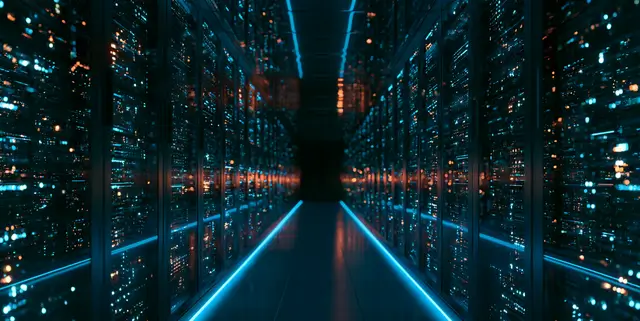
AI is often described as if it lives in the cloud, but the cloud is not magic. It is made of real buildings, packed with real computers, and those computers need a great deal of electricity. As more people use chatbots, image generators, and other AI tools, the demand on data centers keeps rising. That growing appetite for power is now becoming a public concern.
A data center is a large facility filled with servers. These servers store information, run websites, and process requests from users. AI data centers do the same thing, but at a much larger scale. Training a modern AI model can require thousands of powerful chips working at the same time for days or even weeks. After training, the system still needs energy every time someone asks a question or generates an image. That means electricity is needed both to build the model and to use it afterward.
One reason AI uses so much power is that the hardware is very demanding. AI chips are designed to do huge amounts of math very quickly. This makes them useful, but it also makes them hot. When machines get hot, they need cooling systems to stop them from failing. Cooling alone can consume a large share of a data center’s electricity. In some places, it also requires a lot of water. That raises another question: if AI is meant to make life easier, who pays the environmental cost?
Another reason is scale. A single person asking one AI question may not seem important. But millions of people using the same service every day can create an enormous load. Companies often race to offer faster answers, larger models, and more features. Bigger models usually mean more computing power, and more computing power means more electricity. The public is told these systems are efficient, but efficient compared with what? A simple search or a smaller software tool may still use far less energy than a large AI model.
There is also a business side to this story. AI companies want growth. Investors want returns. Technology firms compete to build bigger data centers and buy more chips because they believe that larger systems will give them an advantage. But this rush can hide costs that are not always shown on a product page. Communities near data centers may face higher power demand, pressure on local grids, noise, heat, and concerns about water use. Are local residents getting real benefits, or are they carrying the burden for distant profits?
There are also job and fairness questions. When companies spend billions on AI infrastructure, that money is not spent elsewhere. Could some of it support schools, hospitals, or energy upgrades instead? And if AI systems are replacing tasks once done by people, such as customer support, writing, or basic analysis, then society should ask who gains and who loses. Electricity use is not only an engineering issue. It is also a social one.
Privacy is part of the picture too. Many AI services depend on huge amounts of data, and the more data they process, the more powerful and valuable they become. But users should ask what happens to their prompts, files, voice recordings, or images. Are they stored, analyzed, or used to improve future systems? The energy cost of AI is visible in power bills and cooling towers, but the privacy cost may be less visible and just as important.
Some experts say the problem can be reduced with better chips, better software, and smarter scheduling of computing jobs. Others argue that the bigger issue is the constant push to use AI everywhere, even where it is not needed. Not every task needs a large model. Sometimes a smaller tool, a search engine, or a simple automation system would do the job with less energy and less risk.
Governments and utility companies are beginning to pay closer attention. They may require data centers to report energy use, use cleaner power, or limit strain on the grid. That sounds sensible, but rules alone will not solve everything. If demand keeps rising quickly, even cleaner electricity can be stretched thin. The hard question is whether society wants unlimited AI growth, or a more careful approach that balances convenience with real-world costs.
For everyday users, the main lesson is simple: AI is not free, even when it looks free on the screen. Every query has a hidden footprint. That footprint includes electricity, cooling, hardware, land, and sometimes water. It may also include privacy risks and economic tradeoffs. Asking how much power AI uses is not anti-technology. It is a reasonable way to ask whether the benefits are worth the cost, and who should be responsible for paying it.
As AI becomes more common, the debate should not be reduced to excitement versus fear. It should be about honesty. How much energy is actually being used? Where does it come from? Who is affected? And is the public getting clear answers, or just polished promises? Those are the questions worth asking before AI gets even bigger.