


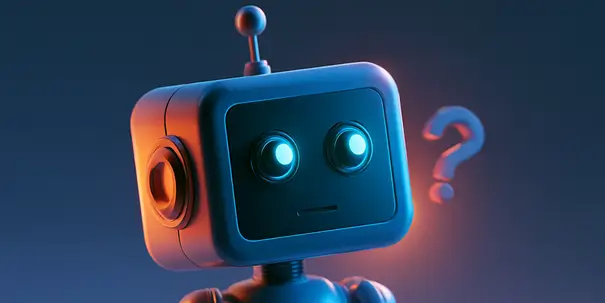
Artificial intelligence can be impressive, fast, and surprisingly useful. It can write emails, summarize documents, answer questions, and help people make decisions. But it is important to remember one simple fact: AI does not always get things right. In some cases, it can give confident answers that are incomplete, outdated, or simply wrong.
For everyday users, this is more than a technical issue. It affects trust, productivity, and business decisions. As companies race to add AI into customer service, search, office tools, and decision-making systems, the risk of errors becomes a major business concern. The challenge is not just building smarter AI. It is also helping people understand when AI should be trusted and when it should be checked.
Why AI can make mistakes
Most modern AI tools do not think the way humans do. They do not understand facts in the same way a person does. Instead, many of them predict the most likely next word or phrase based on patterns learned from large amounts of data. This makes them powerful, but it also creates weak points.
- Outdated information: Some AI tools may have been trained on older data and may not know about recent events.
- Missing context: If a question is vague, the AI may guess instead of asking for clarification.
- Pattern matching instead of true understanding: AI can sound very certain even when it is making an educated guess.
- Errors in source material: If the data used to train the model contained mistakes, the AI may repeat them.
- Overconfidence: AI often presents answers in a smooth, polished style, which can make wrong answers seem trustworthy.
In business terms, this means AI can increase speed, but it can also spread mistakes quickly. A wrong answer from a human may be caught by a manager. A wrong answer from AI can be repeated thousands of times if it is built into a product or workflow.
Why the problem matters for companies
AI errors are not just embarrassing. They can create real costs. A customer service bot that gives the wrong refund policy can upset customers. A workplace AI tool that misreads a contract could lead to legal trouble. A search assistant that gives false health or financial advice can create serious harm.
That is why many organizations are now looking at AI as a strategic tool that still needs human oversight. In the current market, companies that use AI responsibly may earn more trust than those that rush to automate everything. Trust is becoming a competitive advantage.
There is also a growing business case for AI governance. This includes rules for checking outputs, reviewing sensitive content, and making sure humans remain involved in important decisions. Companies that ignore these steps may move faster in the short term, but they can face bigger losses later through customer complaints, compliance problems, or damaged reputation.
How to spot when AI may be wrong
The good news is that most people can learn to notice warning signs. You do not need to be a technical expert to spot possible AI errors. A careful reader can often tell when an answer should be checked.
- Look for vague language: If the answer sounds general and avoids specifics, it may not be reliable.
- Check for missing sources: If AI gives a factual claim but does not explain where it came from, verify it elsewhere.
- Watch for confident tone with weak detail: A polished answer is not always a correct one.
- Compare with trusted sources: Use official websites, news outlets, or expert references to confirm important facts.
- Ask follow-up questions: A better answer may appear if you request examples, dates, or step-by-step reasoning.
- Be careful with numbers and names: AI often makes mistakes with statistics, people, places, and product details.
A useful habit is to treat AI as a helpful assistant, not the final authority. This is especially important for medical, legal, financial, and safety-related topics. In these areas, a human expert should always review the final answer.
What businesses can do
Companies adopting AI should build systems that reduce risk. This does not mean avoiding AI. It means using it with care. The most successful businesses will likely be those that combine automation with quality control.
- Human review for sensitive tasks: Important answers should be checked before they reach customers or staff.
- Clear limits: AI should be told what it can and cannot do.
- Regular testing: Companies should test AI tools to find errors before users do.
- Updated data: Keeping information current can improve answer quality.
- User education: Employees and customers should know that AI can make mistakes.
From a market perspective, this creates demand for tools that help verify AI output. As more firms use AI, there is likely to be growth in software for fact-checking, monitoring, logging, and compliance. In other words, the rise of AI is also creating a new market for AI safety.
The bigger strategic picture
AI is becoming part of daily work in many industries. That means the ability to manage errors will matter as much as the ability to generate answers quickly. The companies that win in this environment will not just be the ones with the most advanced models. They will be the ones that know how to use AI responsibly, explain its limits, and protect users from bad information.
For ordinary users, the message is simple: enjoy the speed and convenience of AI, but keep your judgment active. If an answer seems unusual, important, or too good to be true, pause and check it. A few extra seconds of caution can prevent bigger problems later.
AI can be a powerful tool. But like any tool, it works best when people understand both its strengths and its weaknesses.