



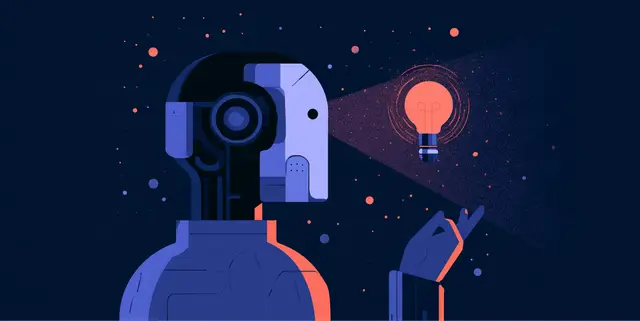
Artificial intelligence is showing up everywhere these days. It helps write emails, suggests what to watch next, answers questions, and can even help plan a trip or summarize a long article. For many people, it feels a little like having a helpful assistant in your pocket. But a question keeps coming up: is AI making us smarter, or is it making us lazier?
The honest answer is: it can do both. Like a kitchen appliance, AI can save time and make work easier, but if we use it for everything, we may stop using some of our own skills. The real issue is not whether AI is good or bad. The bigger question is how we use it in daily life.
How AI can make us smarter
When used well, AI can help people think better, learn faster, and make fewer mistakes. It can be like a flashlight in a dark attic: it does not do the cleaning for you, but it helps you see what is there.
For example, AI can:
- Explain difficult ideas in simpler words
- Summarize long text so you can understand it faster
- Help with spelling and grammar when writing
- Suggest new ideas when you feel stuck
- Give quick answers so you can learn something new right away
This can be especially helpful for students, workers, and older adults who want to keep learning without spending hours searching for information. Instead of giving up when something seems confusing, a person can ask AI to break it down in a more friendly way.
AI can also help people see patterns they might miss. For example, if you are trying to track your spending, organize appointments, or compare product options, AI may notice details and group information in a useful way. That can help people make better choices.
How AI can make us lazier
At the same time, AI can tempt people to take the easy route. If a tool can do the thinking for us, it becomes tempting to let it handle more and more of our daily tasks. That may save time in the moment, but over time it can weaken the skills we use to think, write, remember, and solve problems.
Think of it like using a calculator for every little math problem. A calculator is useful, but if you never practice basic math, you may forget how to do it on your own. AI can work the same way. If we let it write everything, answer everything, and decide everything, we may stop building our own mental muscles.
Some signs that AI may be making us too lazy include:
- Copying answers without checking them
- Using AI to avoid reading or thinking through a problem
- Relying on it for every message, email, or decision
- Trusting it even when the answer sounds wrong
- Spending less time practicing skills like writing, memory, and judgment
There is also a risk of becoming less careful. AI can make mistakes, and sometimes it sounds confident even when it is wrong. If people stop paying attention, they may accept bad information without noticing. That can cause problems at work, at home, or when making important decisions.
The middle ground: AI as a helper, not a replacement
The best way to think about AI is as a helper, not a replacement for your own mind. It should be more like a bicycle for your brain than a wheelchair. It can help you move faster, but you still need to steer.
That means using AI to support your thinking, not to do all the thinking for you. For example:
- Ask AI to explain something, then put the idea into your own words
- Use AI to create a first draft, then review and improve it yourself
- Let AI help you brainstorm, but choose the final answer on your own
- Check important facts with a trusted source before acting on them
This approach keeps your brain active while still saving time. It can make everyday tasks easier without taking away your ability to think clearly.
What this means for students
For students, AI can be both a blessing and a trap. It can help with homework, explain lessons in plain language, and offer practice questions. But if students use it to avoid learning, they may miss the chance to build confidence and understanding.
A student who uses AI to study a topic, then tests themselves without help, is likely to learn more. A student who simply copies AI answers may finish faster, but they may not remember much later. In school, the goal is not just to get the right answer. It is to learn how to think.
What this means for workers
At work, AI can cut down on boring tasks and give people more time for important work. It can help draft messages, organize notes, and sort through large amounts of information. That sounds great, and often it is. But workers should be careful not to let AI take over tasks that require human judgment, kindness, or common sense.
For example, AI might help write a customer reply, but a human may still need to check whether the tone is polite and the facts are correct. AI can be fast, but people are still needed for care, trust, and responsibility.
What this means for everyday life
For regular people, AI can be useful in many small ways. It can help write a shopping list, plan a meal, draft a letter, or explain a bill. For older adults, it can be a handy tool for understanding technology, reading confusing instructions, or getting started on a task that feels overwhelming.
Still, it is wise to stay alert. If something matters a lot, like money, health, or legal issues, do not depend on AI alone. Use it as a starting point, not the final word.
Simple ways to use AI wisely
- Double-check important facts
- Use it to help you think, not think for you
- Keep practicing your own skills
- Be careful with private information
- Ask follow-up questions when something is unclear
AI is not making people smarter or lazier all by itself. People choose how to use it. Used wisely, it can save time, teach useful things, and open doors for people who need a little help. Used carelessly, it can weaken our habits and make us less active thinkers.
The good news is that you do not have to choose between using AI and keeping your mind sharp. You can do both. The key is to stay involved, stay curious, and remember that the tool should serve you, not replace you.