



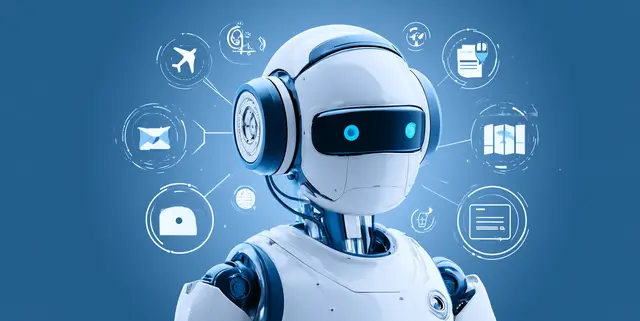
Artificial intelligence is moving beyond tools that simply answer questions or generate text. A new idea is taking shape: the AI agent. If a chatbot is like a helpful librarian who waits for your request, an AI agent is more like a capable assistant who can take action, follow steps, and work toward a goal on your behalf.
This shift matters because it marks a deeper stage in the history of computing. First came machines that could calculate. Then came software that could store, sort, and search information. Then came AI systems that could recognize patterns and produce language. Now we are entering an era where AI does not only respond, but also plans, decides, and acts. That is a big change, and it may reshape how people work, shop, learn, and manage everyday life.
What is an AI agent?
An AI agent is a computer program that can observe information, make decisions, and take actions to reach a goal. In simple terms, it is an AI system that does not just talk about what to do. It can try to do it.
For example, imagine you ask an AI agent to plan a trip. A regular chatbot might suggest destinations and list some hotels. An AI agent could go further. It could compare flight prices, check hotel availability, draft an itinerary, and even help book the trip if you allow it.
That ability to move from conversation to action is what makes AI agents so important. They are not just information systems. They are becoming task systems.
How does an AI agent work?
Most AI agents follow a simple loop:
- They receive a goal – for example, “Find the cheapest train ticket to Chicago.”
- They gather information – they may search the web, read files, or check connected apps.
- They think through options – they compare possible next steps.
- They take an action – such as clicking a button, sending a message, or updating a calendar.
- They check results – if the task is not finished, they keep going.
This loop can happen many times in a row. That is why agents can handle longer tasks than a normal chatbot. They can break a large job into smaller steps and keep working until the goal is reached.
In technical terms, many agents use a combination of large language models, memory, tools, and rules. But you do not need to remember the technical words. The easiest way to think about it is this: an AI agent is an AI with a job to do.
What makes agents different from chatbots?
Chatbots are good at conversation. AI agents are built for action.
- Chatbots answer questions.
- AI agents pursue goals.
A chatbot may tell you how to write an email. An agent may draft the email, adjust the tone, and send it after your approval. A chatbot may explain how to compare insurance plans. An agent may gather the options, summarize them, and highlight the differences.
This is why many experts believe agents could become one of the most important AI developments since the smartphone. Smartphones put powerful computing in every pocket. AI agents may put a kind of digital worker beside every person.
Where AI agents are already being used
AI agents are still developing, but they are already appearing in several places:
- Customer service – answering common questions and helping solve simple problems.
- Scheduling – managing calendars and setting up meetings.
- Shopping assistance – comparing products and finding deals.
- Business support – organizing reports, summarizing documents, and helping with routine office work.
- Personal help – reminding users about tasks, appointments, and bills.
In the future, agents may become common in hospitals, banks, schools, and homes. A person might speak to one agent that coordinates with several other systems in the background. That could save time and reduce stress, especially for older adults or anyone who finds technology difficult to use.
Why this matters for everyday life
The biggest promise of AI agents is not novelty. It is time. Many people spend hours each week on repetitive tasks: booking appointments, filling out forms, searching for information, or comparing prices. Agents could take over some of this busywork.
For older people, that may be especially valuable. An agent could help with reminders, explain letters or bills in simple language, or guide someone through online services step by step. It could make digital life feel less confusing and more human.
There is also a larger historical pattern here. In past eras, machines replaced physical labor in factories. Later, computers automated office work. AI agents may automate parts of decision-making and coordination. That does not mean people become less important. It means human effort may shift toward judgment, care, creativity, and relationships.
The risks are real
AI agents are powerful, but they are not perfect. In fact, because they can take action, their mistakes can matter more than the mistakes of a chatbot.
- They can misunderstand goals and do the wrong thing.
- They can make overconfident errors if the AI is wrong but sounds certain.
- They can access sensitive data if not carefully controlled.
- They can act too quickly without enough human review.
That is why many systems will need guardrails. People should be able to set limits, review actions, and approve important steps. An agent should be helpful, but it should not be left alone without supervision in high-stakes situations like medical care, legal work, or money management.
What the future may look like
Over time, AI agents may become less like separate apps and more like a layer built into daily life. You may not open an “agent” app at all. Instead, your devices, websites, and services may quietly use agents in the background to help you complete tasks.
That could change how people interact with technology. Instead of learning menus, buttons, and forms, people may simply state their intent: “Pay my utility bill,” “Schedule my doctor visit,” or “Find a birthday gift for my grandson.” The AI may then help carry out the steps.
If this future arrives, it may feel as important as the arrival of the web itself. The web connected information. AI agents may connect information and action. That is a profound step forward.
Still, the best future is not one where machines replace human choice. It is one where machines reduce drudgery and give people more room to live. The promise of AI agents is not just speed. It is the possibility of a world where technology becomes more practical, more helpful, and easier to use for everyone.
In short: an AI agent is an AI system that can work toward a goal by thinking through steps and taking actions. It is a major move from talking machines to doing machines, and it may become one of the most important changes in the digital age.