


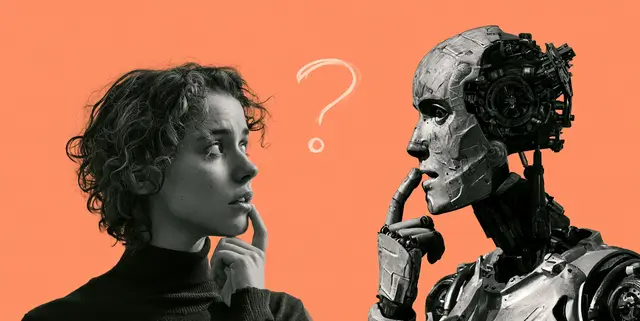
People often assume artificial intelligence is either brilliant or clueless. The truth is more complicated. AI can answer many everyday questions quickly, but it can also sound confident while being wrong. That makes it useful, but also risky.
To test its limits, I asked AI 20 questions that humans often get wrong. Some were simple facts. Others were questions about memory, history, health, and common beliefs. The answers were often neat and polished, but not always trustworthy. That is the first lesson: a smooth answer is not the same as a true one.
What AI did well
AI was strong at pattern-based questions. It could explain common ideas clearly, compare options, and turn messy topics into plain language. For many people, that is valuable. It can save time, reduce confusion, and make hard topics easier to follow.
It also helped with questions where the answer is widely accepted and well documented. In those cases, AI often gave useful summaries. But even then, it was best when the question was specific. Vague questions led to vague answers.
Where AI struggled
The harder questions exposed real weaknesses. AI sometimes mixed up details, oversimplified complex issues, or repeated popular myths. It can also miss context. A human reader may know that a question has emotional, cultural, or historical layers. AI may flatten those layers into a clean but incomplete response.
That matters because people may trust AI too quickly. If a tool sounds certain, users may stop checking sources. This is especially dangerous in health, money, legal matters, and public policy.
Questions worth asking
- Who trained the system, and on what data?
- What views or groups are missing from the training material?
- Could the answer reflect bias rather than fact?
- Is the AI helping people, or quietly replacing human judgment?
- What happens when a wrong answer is repeated at scale?
These are not small concerns. AI is not just a search tool. It is becoming part of how people learn, work, and make decisions. That raises questions about privacy, because many systems collect user input. It also raises questions about job displacement, because companies may use AI to cut costs instead of supporting workers.
The biggest lesson from these 20 questions is simple: AI is helpful, but not wise in the human sense. It does not understand truth the way people do. It predicts likely answers based on patterns. That can look like knowledge, but it is not the same thing.
So the best approach is caution. Use AI to help you think, not to think for you. Ask for sources. Check important facts. And remember that when a machine gets a question wrong, it may do so with great confidence.