



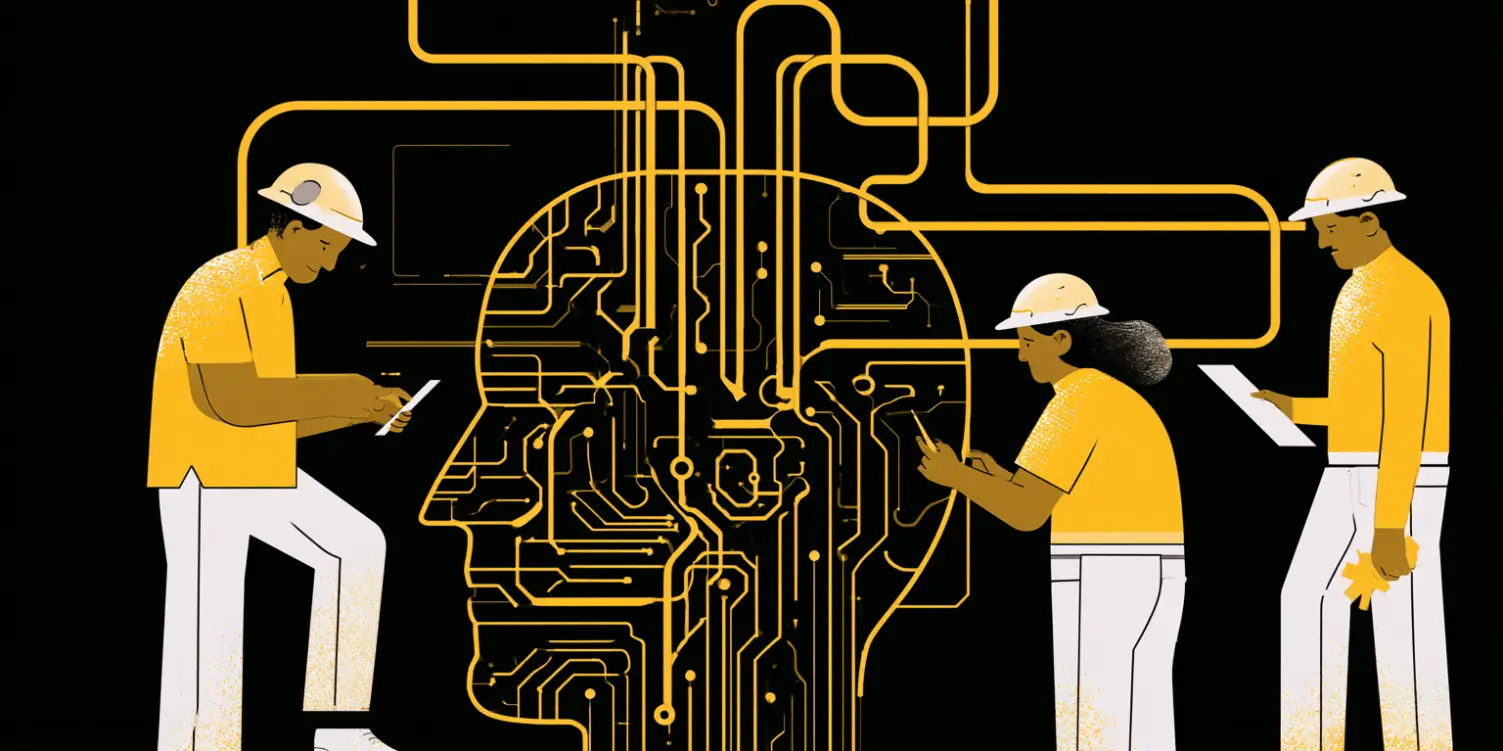
Artificial intelligence is changing a simple business truth: knowledge no longer has to stay trapped in one person’s head. A skilled worker, a seasoned manager, or a specialist with years of experience can now use AI tools to share that expertise with many more people at once. That sounds exciting, and in some cases it is. But it also raises serious questions about trust, fairness, privacy, and the future of work.
In the past, expertise was often hard to scale. A company might rely on its best employee to answer customer questions, train new staff, or review complicated decisions. That person could only do so much in a day. Now, AI systems can help turn that know-how into templates, chat assistants, search tools, and decision-support systems. For example, a law firm might use AI to help junior staff find relevant documents faster. A hospital might use AI to help nurses look up procedures. A small business might use AI to answer common customer questions in plain language.
This is where the idea of expertise as a scalable asset becomes important. Instead of knowledge being limited by time and location, AI can help spread it across teams, offices, and even countries. A single expert can review AI-generated guidance, correct mistakes, and shape the system so others benefit. In theory, this can save time, reduce repeated work, and make services more consistent.
But there is a catch. AI does not truly understand expertise the way a person does. It learns patterns from data, and that data may be incomplete, outdated, or biased. If a company feeds an AI system only one style of thinking, it may copy that style without question. That can be useful in some settings, but dangerous in others. A wrong answer in finance, health, hiring, or legal advice can cause real harm.
There is also the issue of job displacement. If AI can do part of an expert’s work, companies may decide they need fewer experienced staff. That could make organizations cheaper to run, but it may also reduce opportunities for younger workers to learn from human mentors. Over time, a business may become dependent on systems it does not fully understand and on a smaller number of people who know how to manage them.
Privacy matters too. To capture expertise, companies often feed AI tools emails, meeting notes, internal manuals, customer records, or recorded conversations. If that information is not handled carefully, sensitive data can leak or be reused in ways people never expected. Workers and customers should be told clearly what data is being used and how it is protected.
The best use of AI may not be to replace expertise, but to amplify it. Human experts should remain in control, checking the output, setting boundaries, and deciding where AI should not be used. Businesses should ask hard questions: What happens when the system is wrong? Who is accountable? Whose knowledge is being captured? And who benefits from it?
AI can make expertise more widely available, but only if companies treat it as a tool, not a shortcut around responsibility. The real value is not just scaling knowledge. It is scaling good judgment, safely and fairly.