


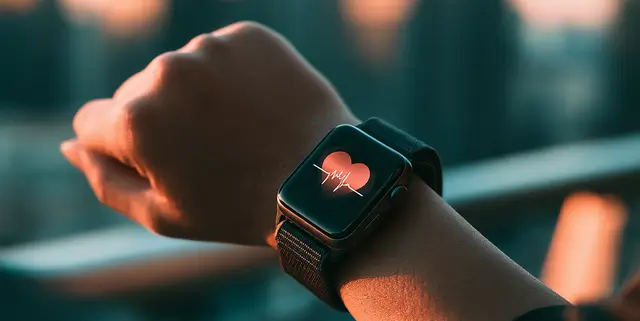
Smartwatches are getting better at tracking our lives. They count steps, measure heart rate, estimate sleep, and even flag unusual changes in rhythm. Some companies now suggest that these little devices can help predict future health problems. That sounds impressive, but it also raises an important question: how much should we trust a watch on our wrist?
The short answer is that smartwatches can be useful early warning tools, but they do not predict health with perfect accuracy. They can spot patterns that may deserve attention, yet they can also make mistakes. A watch may warn you about a possible problem when nothing is wrong. Or it may miss something important. For older adults, and for anyone who is not very familiar with technology, it helps to understand both the promise and the limits.
What a smartwatch can actually measure
Most smartwatches track a few common signals. These may include:
- Heart rate during rest, walking, or exercise
- Irregular heartbeat alerts
- Sleep length and sleep stages
- Steps and general activity
- Blood oxygen on some models
- Skin temperature trends on some devices
These measurements can be helpful because they show changes over time. For example, if your resting heart rate is usually steady but starts rising for several days, that may be a sign of illness, stress, poor sleep, or overexertion. A smartwatch may notice that change before you do.
But there is a difference between tracking changes and predicting disease. A device may detect that something is different, but it usually cannot tell you the reason. A high heart rate might mean a fever, anxiety, dehydration, or simply a brisk walk. The watch sees data; it does not understand the whole picture of your life.
Where smartwatches may help
In some cases, these devices can be genuinely useful. They may encourage people to move more, sleep better, or notice symptoms sooner. For example, if a watch repeatedly alerts someone to an irregular pulse, that person may decide to speak with a doctor. In that way, the device could help catch a problem earlier than it otherwise would have been found.
Some people also use smartwatches to watch for trends after surgery, during recovery, or while managing long-term conditions. If a person is keeping track of daily activity or heart rate, it can create a useful record to share with a healthcare provider.
That said, a smartwatch should be seen as a helper, not a doctor. It can support health awareness, but it should not replace medical advice, proper testing, or a professional diagnosis.
Why the results are not always reliable
Many smartwatch features are based on sensors and algorithms. These are useful tools, but they are not perfect. A loose band, dark skin tones, movement, tattoos, cold weather, or even the shape of your wrist can affect the readings. Different companies also use different methods, and not all of them are equally accurate.
There is another issue that gets less attention: the data may look scientific, but the interpretation can be misleading. If a watch says your sleep quality was poor, what does that really mean? If it says your stress is high, how did it know? Often, the answer is that it made an estimate from heart rate, movement, and breathing patterns. That estimate may be useful, but it is not the same as a medical test.
People can also become too focused on the numbers. This can create anxiety. Someone may check their watch many times a day and worry over small changes that are not medically important. For some users, the device may encourage health awareness. For others, it may increase stress.
What about predictions for future illness?
This is where the claims can become especially exciting, and especially confusing. Some companies and researchers are trying to use smartwatch data to predict infections, heart problems, sleep disorders, or other health concerns before strong symptoms appear. This is an active area of research, and it is promising in some situations.
Still, we should be careful. A prediction is only useful if it is accurate, understandable, and actionable. If a watch predicts a problem but cannot say what to do next, the warning may not help much. Worse, it could lead to unnecessary fear, extra doctor visits, or unneeded tests.
There is also the question of who benefits. Do these features mainly help people who already have access to good healthcare, expensive devices, and time to monitor them? Or can they truly help people who most need early warning tools? That is an important fairness issue.
Privacy matters too
Health data is deeply personal. A smartwatch may collect information about your body, habits, sleep, location, and daily routine. That data can be valuable to companies. It may be shared with app partners, stored in the cloud, or used to improve products and advertising systems, depending on the company’s policies.
Before trusting a device, it is wise to ask hard questions:
- Who can see my data?
- How long is it stored?
- Can I delete it?
- Is it shared with third parties?
- What happens if the company is sold or changes its policy?
For many people, the convenience of health tracking may be worth some trade-offs. But those trade-offs should be understood clearly, not hidden in fine print.
Bias and unequal accuracy
Not every smartwatch works equally well for every person. Some devices have been tested more on certain age groups, skin tones, body types, or activity levels than others. If the training data is limited, the results may be less reliable for people who do not match the original test group.
This matters because a health tool should be trustworthy for everyone, not just for the people easiest to study. If a watch is less accurate for older adults, people with darker skin, or people with certain medical conditions, then the product may widen health gaps rather than close them.
Should you rely on it?
A smartwatch can be helpful if you use it as one piece of information, not the final word. It may notice trends worth discussing with a doctor. It may motivate healthy habits. It may help you keep a simple record of your daily activity and sleep.
But it cannot replace medical training, lab tests, or a careful conversation with a clinician. It does not know your full history. It does not understand your symptoms the way a human professional can. And it may be wrong.
If your watch gives a warning, do not panic. Check whether the reading makes sense. Think about whether you were exercising, stressed, tired, or unwell. If you have symptoms that worry you, contact a healthcare provider. If the device is making you anxious all the time, it may be worth turning off some alerts or taking a break from it.
Smartwatches may become better at health prediction over time. That is possible. But the most honest view today is this: they are useful tools with real limits. They can help people notice changes earlier, but they do not truly know the future. When health is involved, caution is better than hype.