


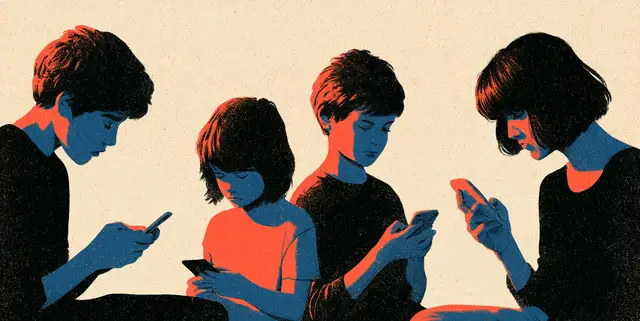
Technology has made many parts of daily life easier. We use phones to navigate streets, apps to remember appointments, calculators to do sums, and smart devices to answer questions in seconds. This convenience is real, and for many people it is helpful. But it also raises an uncomfortable question: if machines do more and more for us, are we slowly forgetting how to do simple things ourselves?
The answer is not a simple yes or no. In some ways, technology saves time and reduces stress. In other ways, it can weaken skills that people once used every day. We may become less practiced at spelling, mental math, reading maps, remembering phone numbers, or even waiting patiently without constant digital distraction. When a tool is always available, the brain may stop exercising certain abilities.
That does not mean technology is bad. Far from it. Many people depend on it for safety, health, work, and communication. Older adults may use devices to stay in touch with family. People with disabilities may use assistive tools to live more independently. In these cases, technology is not taking away skill; it is creating access. The question is not whether we should use technology, but whether we are using it in a balanced way.
One concern is skill atrophy, which means abilities weaken when they are rarely used. If a phone always finds the route, a person may stop paying attention to directions. If autocorrect handles spelling, writing by hand may feel harder. If every calculation is done by app, basic arithmetic may become slow and uncomfortable. These changes may seem small at first, but over time they can add up.
There is also a social side to this issue. Many people worry that children are learning to swipe before they learn to think deeply, solve problems, or focus for long periods. Adults are not immune either. Constant notifications can shorten attention spans and make it harder to read, reflect, or complete tasks without interruption. When technology always offers a faster answer, patience and persistence can be crowded out.
Still, it would be unfair to blame technology alone. Human habits matter too. If people choose convenience every time, they may naturally grow dependent. Companies also design products to be easy, fast, and addictive. That raises ethical questions. Should devices be built to keep us clicking and scrolling as long as possible? Should companies warn users when a tool may reduce independent thinking or learning? These are not small questions.
There is also the issue of privacy. Many helpful tools collect personal data to work better. Navigation apps track location. Smart speakers listen for commands. Health apps may store sensitive information. If we rely too much on these systems, we may trade away both skill and privacy without fully noticing.
The good news is that basic skills do not have to disappear. People can use technology while still practicing old-fashioned habits. For example:
- Try doing simple math without a calculator once in a while.
- Write important phone numbers down and memorize a few.
- Use a map sometimes instead of always following GPS.
- Read a paper book or long article without checking your phone.
- Let children practice handwriting, problem-solving, and memory skills.
The goal is not to reject modern tools. It is to stay capable without them. A person who can use technology wisely, but still knows how to think, remember, and solve problems on their own, is in a stronger position than someone who depends on every device for every task.
So, are we losing basic skills because technology does everything for us? In some cases, yes. But it is not inevitable. The real issue is whether we remain intentional. If we keep practicing the basics, ask hard questions about how tools shape our habits, and refuse to let convenience replace understanding, technology can remain a servant rather than become a crutch.