


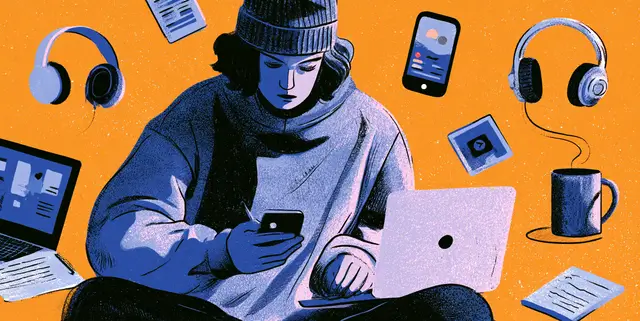
Technology has become so deeply woven into daily life that it can feel almost invisible. We wake up to alarms on our phones, check the weather on apps, follow directions from maps, pay bills online, talk to family through screens, and ask machines to help us write, plan, learn, and work. What once felt like convenience now often feels like necessity. That raises an important question: are we becoming too dependent on technology?
The short answer is that we are becoming more dependent, but not always in a bad way. Every major tool in history has changed how people live. The wheel, the printing press, electricity, the telephone, and the internet all made life faster, easier, and wider in reach. In that sense, today’s technology is part of a long human pattern: we create tools, then our lives reshape around them. The difference now is speed. Change is happening so quickly that many people barely have time to adjust before the next device, app, or AI system arrives.
For many people, technology is no longer just helpful. It is the way they remember birthdays, find addresses, store photos, manage money, and stay in touch with the world. When a phone battery dies or the internet goes out, even a small interruption can feel surprisingly stressful. That reaction shows how much daily life now depends on digital systems. We are not only using technology. In many cases, we are trusting it to hold pieces of our memory, attention, and decision-making.
This dependence has clear benefits. Technology saves time. It helps older adults stay connected with family. It gives people access to medical advice, transportation, shopping, and emergency help. It can also support independence. Someone who has trouble hearing can use captions. Someone who has trouble seeing can use voice assistance. Someone living far from relatives can still talk face-to-face through a screen. For many people, technology is not a luxury. It is a bridge to a fuller life.
Yet every bridge can become a crutch if we lean on it too much. One concern is that technology can weaken skills we once used every day. Many people no longer memorize phone numbers, read paper maps, or calculate simple tasks in their heads. Search engines answer questions instantly, which is useful, but it can also make us less likely to pause and think deeply. When machines always provide the next step, we may practice less patience, less problem-solving, and less memory.
Another concern is attention. Modern devices are designed to keep us looking, tapping, and scrolling. Notifications, alerts, and endless feeds can pull our minds in many directions at once. This is not just a matter of habit; it changes how we experience time. A person can spend hours online and still feel unsatisfied, tired, or distracted. In that sense, technology does not merely serve us. It can also shape us, sometimes in ways we do not notice until later.
There is also the risk of overtrust. People may assume digital systems are always correct, always secure, and always available. But technology can fail. Power outages happen. Networks go down. Devices break. Online accounts are hacked. AI systems can make mistakes or give confident but wrong answers. When we depend too heavily on tools without keeping our own judgment sharp, we may become more vulnerable, not less.
Still, it would be wrong to say the answer is simply to use less technology. The world is not going back. History rarely moves in reverse. Once a society adopts a powerful tool, the real question becomes not whether to use it, but how to use it wisely. The printing press did not end memory, but it changed what people needed to memorize. The automobile did not end walking, but it changed how people traveled. In the same way, AI and digital devices will not end human thinking, but they will change which skills matter most.
That is why balance matters. We may need to protect a few old habits even in a digital age. Writing down important phone numbers. Keeping a paper copy of key documents. Knowing how to read a map. Talking face-to-face when possible. Taking breaks from screens. These are not signs of being old-fashioned. They are signs of resilience. A person who can live both with technology and without it, at least for a while, is better prepared for the future.
Families and schools also have a role to play. Children should learn not only how to use devices, but how to question what those devices tell them. Adults should model healthy habits by showing that technology is a tool, not a master. Communities can encourage in-person gatherings, public spaces, and slower forms of connection. A healthy society is not one that rejects technology. It is one that keeps human judgment at the center.
Looking ahead, the next wave of technology may make this question even more important. Artificial intelligence could write messages, sort information, plan schedules, and perhaps even help make decisions in work and medicine. That could free people from routine tasks and open new possibilities for creativity and care. But it could also make it easier to hand over too much responsibility. The biggest challenge of the future may not be building smarter machines. It may be remembering how to remain wise ourselves.
So, are we becoming too dependent on technology? In some ways, yes. But dependence is not always weakness. It can also be a sign that a tool has become useful enough to shape civilization. The deeper issue is whether we remain in charge of the tools we create. If technology helps us live with more dignity, more connection, and more freedom, then it serves humanity well. If it begins to replace our memory, attention, and judgment, then it asks too much.
The future will likely belong to people who can use technology confidently without surrendering their common sense. That may be the real lesson of our age: the most advanced society is not the one with the most devices, but the one that knows when to put them down.