



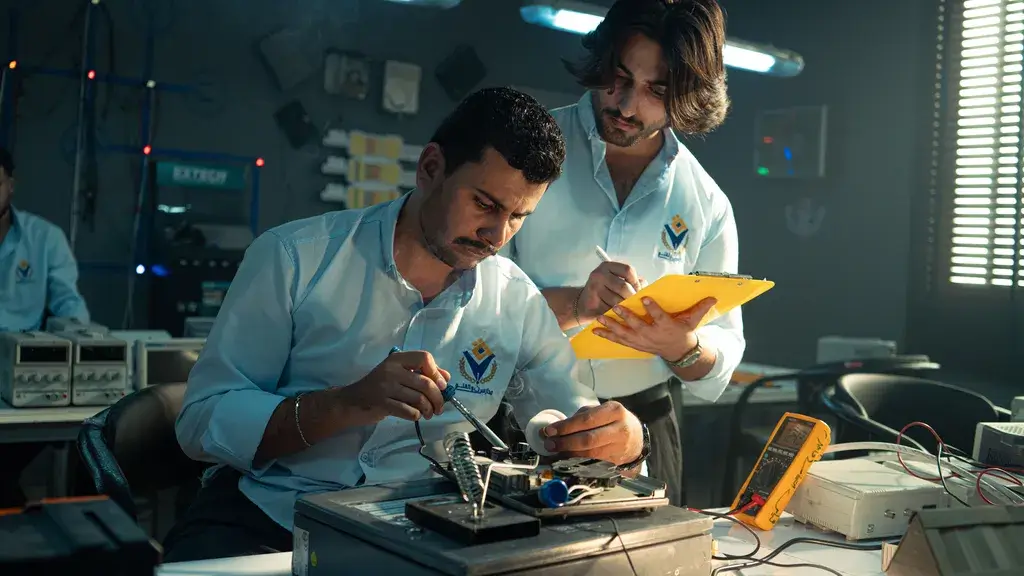
Many people are asking the same question today: will artificial intelligence take our jobs? It is a fair worry. New machines and new computer tools are arriving quickly, and some people feel left behind. Others wonder if they should move away from office work and go back to a simpler life, like farming. The short answer is: AI will change many jobs, but it will not replace every worker. Some jobs will shrink, some will grow, and many will simply change.
AI is a computer system that can do tasks once done by people. It can read text, answer questions, sort information, and help with writing, pictures, customer service, and more. This makes some work faster and cheaper. But that does not mean all human work will disappear. In many places, people still need judgment, care, trust, hands-on skill, and common sense.
Which jobs are most at risk?
Jobs that involve repeating the same steps over and over are most likely to be affected first. For example:
- basic data entry
- simple customer support chats
- some bookkeeping tasks
- routine office paperwork
- simple content writing
In these jobs, AI can help a company do the work with fewer people. That does not always mean everyone loses a job at once. Often, one worker is asked to do more because the AI is helping behind the scenes.
Still, if a person’s job is mostly routine, it may be wise to learn new skills now. That is the safest way to prepare.
Which jobs are safer?
Jobs that need human touch, real-world skill, or trust are harder for AI to replace. These include:
- nurses and caregivers
- teachers and trainers
- electricians and plumbers
- farmers and farm workers
- repair workers
- drivers in some areas, at least for now
- jobs that involve speaking with people face to face
AI can help these workers, but it cannot easily do the work by itself. A machine cannot comfort a sick person, fix a broken pipe in a wet basement, or decide what a family needs during a crisis. People still matter a great deal.
Can farming protect you?
Some people think farming is a safe place to go if office jobs become too uncertain. Farming does have strengths. People will always need food. That means farming is not going away. In fact, good food production will remain important for a long time.
But farming is not always easy or safe from change. Modern farming already uses technology, including machines, GPS tools, weather apps, and sometimes AI. Big farms may use smart systems to plant, water, and harvest more efficiently. So farming is not completely outside the world of technology.
Even so, farming still depends on human effort. A farmer must watch the weather, care for animals or crops, manage soil, repair equipment, and make many practical decisions. These are not simple computer tasks. They need experience and good judgment.
If you want to farm, that can be a strong and meaningful path. But it is best to think of farming as a real business and a skilled job, not just a backup plan. It takes learning, patience, strength, and often money to get started.
What should workers do now?
The best answer is not to panic. It is to prepare. Here are a few sensible steps:
- Learn basic AI tools. Even simple knowledge can help you stay useful at work.
- Build people skills. Communication, kindness, and trust are still very important.
- Learn practical skills. Trades, repair work, and caregiving are often in demand.
- Keep learning. Jobs change, so people should keep updating their skills.
- Look for work that combines technology and human ability.
Many workers do better when they use AI as a helper instead of seeing it only as a threat. For example, a secretary might use AI to draft emails faster. A shop owner might use it to answer common questions. A farmer might use smart tools to check soil or weather conditions. In this way, AI becomes a tool, not a replacement.
Will there still be jobs for young people?
Yes, but the job market may look different. Some jobs will disappear, but new ones will appear. In the past, many workers feared computers, the internet, and machines. Yet those changes also created many new kinds of jobs. The same may happen with AI.
Young people may need to be flexible. They should learn how to work with technology, but also how to do things people trust humans to do well. Good communication, problem-solving, and hands-on skills will remain valuable.
So, are we safe?
No one can say that every job is safe. But it is also not true that AI will replace all of us. Most likely, AI will change work in stages. Some people will lose jobs, some will need retraining, and some will find better opportunities. The people who stay ready and keep learning will usually do best.
If you are thinking about farming, that can be a strong path, especially if you enjoy hard work, nature, and practical tasks. Just remember that farming also uses modern tools and business sense. If you are thinking about another job, the same advice applies: choose work that uses human strengths and keep learning new skills.
The main message is simple: AI is powerful, but people are still needed. Jobs may change, but humans are not finished. If we stay adaptable, learn new things, and value real-world skills, we can face the future with more confidence.