



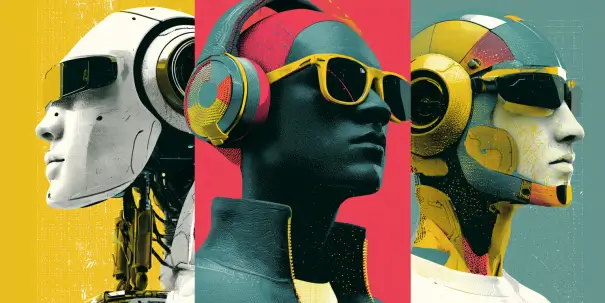
Artificial intelligence is no longer only something people type into a chatbot or see in a flashy demo. A quieter shift is taking place across the tech industry: AI is becoming invisible. It is moving behind the scenes in phones, cars, shopping apps, bank systems, healthcare tools, and workplace software. Most people do not notice it, but they are using it every day.
This change matters because it shows how AI is moving from being a stand-alone product to becoming a basic layer inside many digital services. For companies, that means AI is no longer just a feature to market. It is becoming part of the infrastructure that helps businesses save time, reduce costs, and serve customers more efficiently.
AI is shifting from novelty to utility
In the early days, AI attracted attention because it could answer questions, generate text, or create images. Those uses were easy to see. Today, the most valuable AI tools are often the ones that work quietly in the background. They recommend the next movie you might like, detect fraud on your credit card, improve the quality of your phone camera, or help a customer service system route your call to the right place.
This shift from novelty to utility is important for the market. When AI becomes invisible, users care less about whether a product is labeled as AI and more about whether it simply works better. That changes how companies compete. Instead of asking, “Does this product have AI?” customers are asking, “Does this product save me time or make my life easier?”
Where invisible AI is already common
Invisible AI is already built into many parts of daily life:
- Smartphones: AI improves photos, filters spam calls, predicts text, and adjusts battery use.
- Streaming services: AI recommends shows, songs, and movies based on user habits.
- Online shopping: AI suggests products, sorts search results, and helps detect fake reviews.
- Banking and payments: AI flags suspicious transactions and helps prevent fraud.
- Healthcare: AI supports medical imaging, patient scheduling, and record analysis.
- Work software: AI helps write emails, summarize meetings, and organize tasks.
Most people do not think of these as AI experiences, but they are. That is why the term “invisible AI” is becoming more common. It describes technology that is deeply embedded in digital services without drawing attention to itself.
Why companies like invisible AI
From a business point of view, invisible AI is attractive for several reasons. First, it improves products without forcing users to learn a new tool. If a bank can reduce fraud more accurately or if a retailer can make search results more useful, the benefit is immediate and easy to understand.
Second, invisible AI can lower operating costs. A company may need fewer human agents for routine support, fewer manual reviews for suspicious activity, or less time spent sorting large amounts of data. That creates a strong business case, especially in industries facing tight margins.
Third, it helps companies build loyalty. When a service feels smoother and more personal, customers are more likely to stay. Over time, these small improvements can become a major competitive advantage.
The competitive landscape is changing
The rise of invisible AI is also changing competition in the technology sector. Big platform companies have an advantage because they already control widely used products and can add AI quietly at scale. Smaller companies, meanwhile, may struggle to stand out unless they offer a very clear benefit or specialize in a narrow market.
At the same time, many businesses are no longer trying to build AI from scratch. They are buying ready-made AI tools from cloud providers and software vendors. This is helping AI spread faster, but it also means the market is becoming more crowded. In many areas, the competition is shifting from who has AI to who can use AI most effectively.
For investors and business leaders, this suggests a practical trend: the winners may not always be the companies with the most visible AI products. They may be the companies that quietly use AI to improve service, reduce waste, and make better decisions faster than their rivals.
Concerns about trust and transparency
There is, however, an important downside. When AI is hidden inside everyday systems, people may not know when it is making decisions that affect them. This can create trust problems. A customer may wonder why a loan was denied, why a job application was filtered out, or why a health app gave a certain recommendation.
That is why transparency is becoming more important. Companies need to explain, in simple language, when AI is being used and what it is doing. People do not need every technical detail, but they do deserve to know when a machine is helping shape outcomes that matter to them.
Governments and regulators are also paying closer attention. As invisible AI spreads, there will likely be more pressure for clear rules around data use, fairness, and accountability. Businesses that prepare early may avoid reputational damage later.
What this means for everyday users
For ordinary users, invisible AI is mostly a convenience story. It makes products faster, smarter, and more responsive. A camera that adjusts automatically, a map app that avoids traffic, or an email tool that organizes messages can save time without requiring much effort from the user.
Still, it is worth remembering that convenience comes with trade-offs. AI systems learn from data, and data can be imperfect. That means errors, bias, or over-reliance on automation can still happen. Users do not need to become experts, but they should remain aware that many services are guided by algorithms behind the scenes.
The next phase of AI adoption
The next phase of AI adoption is likely to be less about dramatic demonstrations and more about quiet improvement. Businesses will keep adding AI to existing products, and consumers will keep using it without always noticing. This is how major technologies often spread: first they are visible, then they become normal, and finally they become expected.
That is the real story of invisible AI. It is not a single product or a single company. It is a broad change in how technology is built and delivered. The companies that understand this shift will focus less on hype and more on practical value. The users who benefit most will be the ones who enjoy smoother services, faster answers, and fewer daily frustrations.
In other words, the future of AI may not look like a robot on a screen. It may look like everyday technology that simply works better than before.