



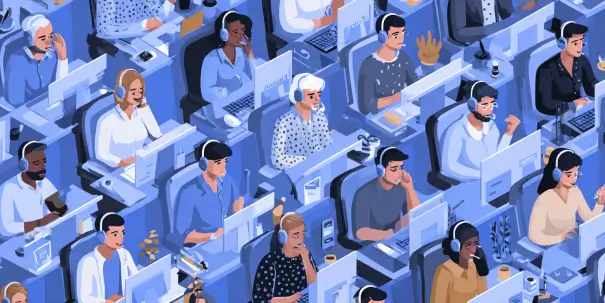
The idea sounds futuristic: a company run mostly, or even entirely, by autonomous AI agents. Instead of a large staff of human employees, software agents would handle customer support, sales outreach, scheduling, coding, bookkeeping, and perhaps even parts of management. Supporters say this could make businesses faster, cheaper, and available around the clock. But before we celebrate, it is worth asking a harder question: what happens when a company is built to replace people from the start?
Autonomous AI agents are not the same as simple chatbots. A chatbot answers questions. An agent can take actions. It may read emails, update records, generate code, place orders, or trigger other systems with little human help. In theory, a business could use a small team of humans to supervise a large fleet of agents. In the most ambitious version, the humans would only step in for exceptions, legal review, or major decisions.
This model is already attracting attention from founders and investors. The promise is easy to see. Agents do not need sleep, breaks, health insurance, or office space. They can work at a scale that would be hard for a small startup to match. A tiny team could appear much larger, at least on paper. For cash-strapped businesses, that is a powerful lure.
Still, the cost savings can hide serious risks. If an AI agent sends a wrong invoice, gives bad advice, or makes a faulty purchase, who is responsible? If it mishandles personal data, who answers to customers and regulators? If it learns from biased data, can it treat people fairly? These are not small details. They are the foundation of trust.
There is also the matter of job displacement. Companies built around autonomous agents may reduce demand for support staff, assistants, entry-level analysts, and other workers who often learn by doing routine tasks. That could make businesses more efficient, but it could also remove the very roles that help people enter the workforce. A society that values only short-term efficiency may discover that it has weakened its own future talent pipeline.
Privacy is another concern. To function well, agents often need access to emails, calendars, documents, customer histories, financial records, and internal chats. The more an agent knows, the more it can do. But the more it knows, the greater the damage if it is hacked, tricked, or simply makes a mistake. Companies will need strict rules about what data agents can see, store, and share.
Then there is the question of transparency. If a company says it is “AI-powered,” that can mean almost anything. Is the AI making decisions, or merely suggesting them? Is a human reviewing the output, or just trusting it? Marketing language often makes these systems sound more reliable than they are. A cautious buyer should ask for clear evidence: error rates, audit logs, escalation paths, and real examples of failure handling.
There are possible benefits, especially for small businesses. Autonomous agents could help a one-person shop provide fast support, manage repetitive tasks, and serve customers outside normal business hours. They might also help disabled founders or overworked teams do more with less. In that sense, these tools could expand opportunity rather than shrink it.
But the first companies built entirely around agents will become test cases for the rest of us. Their success or failure will shape how society thinks about work, accountability, and human value. The key question is not whether AI agents can do more tasks. The real question is whether we want companies designed to minimize people at every step. That is a business decision, but it is also an ethical one.
As this trend grows, customers, workers, and lawmakers should keep asking the uncomfortable questions: Who is accountable? What data is being used? Which jobs are being removed? And when an autonomous agent makes a mistake, will the company act quickly, or hide behind the machine?