



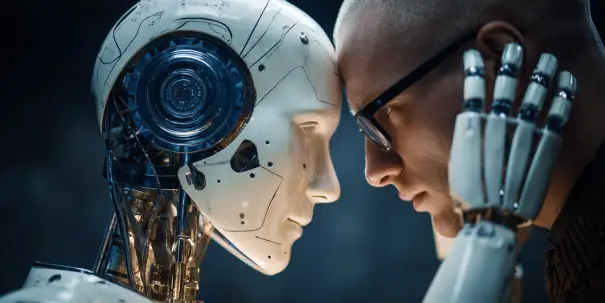
Artificial intelligence has a habit of turning long-held assumptions into short-lived opinions. What once seemed too difficult, too expensive, or too far away is now becoming possible in real products, real workplaces, and real markets. That shift matters not just for engineers, but for companies, workers, and consumers who are beginning to feel the effects of AI in daily life.
For years, many experts believed certain tasks would remain stubbornly human. They pointed to language understanding, decision-making, pattern recognition, and creative work as areas where machines would always fall short. Yet recent advances in AI have changed the conversation. Systems can now write, summarize, translate, analyze images, assist with code, and support customer service at a level that would have been hard to imagine only a few years ago.
The real story is not that AI has become perfect. It has not. The bigger story is that AI has become useful enough to reshape business plans. That is often the moment when technology stops being a research project and starts becoming a competitive weapon.
Why the surprise matters
When experts say something is impossible, markets tend to listen. Companies delay investments. Startups avoid certain ideas. Workers assume change is far off. But when the impossible suddenly becomes practical, the impact can spread quickly.
This is happening across several industries:
- Customer support: AI tools can answer common questions faster and at lower cost.
- Office work: Reports, emails, meeting notes, and summaries can be drafted in minutes.
- Software development: AI can help write and review code, speeding up product delivery.
- Healthcare administration: AI can reduce paperwork and help sort large amounts of information.
- Media and marketing: Teams can create first drafts, campaign ideas, and content outlines much more quickly.
Each of these changes may sound small on its own. Together, they point to a larger shift in how work gets done.
The business case is becoming stronger
Companies rarely adopt new technology because it sounds exciting. They adopt it when it improves profit, speed, or reliability. AI is now starting to meet those tests.
For many businesses, the appeal is simple: do more with the same number of people, or do the same work with fewer delays. That can mean lower operating costs, faster customer response times, and better service. In competitive markets, even a small improvement can matter. If one company can respond to customers in seconds while another takes hours, the first company may win more business over time.
AI is also attractive because it can scale quickly. Once a system works well in one location or department, it can often be rolled out across the entire organization. That makes AI different from some older tools that required heavy manual setup for each use.
At the same time, the market is becoming crowded. Large technology firms, cloud providers, and startups are all trying to capture value from AI. This competition is driving faster product releases, lower prices in some areas, and a constant race to improve performance. For buyers, that can be good news. For vendors, it means pressure to prove real results instead of making bold claims.
What experts got wrong
Many experts did not underestimate the possibility of AI itself. Rather, they underestimated the pace of improvement and the speed of adoption. They assumed that even if AI reached useful levels, businesses would move slowly. In practice, companies have been eager to test tools that save time and reduce repetitive work.
Another mistake was assuming AI would only matter in narrow technical settings. Instead, it is spreading into everyday tasks that touch almost every industry. That broad reach is one reason the impact feels so sudden.
It is also worth noting that AI often succeeds in ways that are less dramatic than science fiction. It does not need to think like a human to be valuable. It only needs to help people finish tasks faster, make fewer mistakes, or handle more work.
The risks are still real
Even as AI proves skeptics wrong, caution is still necessary. The technology can make mistakes, produce false information, and reflect bias in the data it learns from. It can also be used in ways that create confusion or harm.
Businesses that rush in without clear rules may face problems with privacy, quality control, or legal responsibility. Workers may also worry about job loss or job changes. In many cases, the bigger risk is not that AI replaces every job, but that it changes many jobs at once.
That means leaders need a balanced strategy. They should use AI where it truly adds value, but keep human oversight in areas that require judgment, trust, and accountability. The best results will likely come from combining machine speed with human experience.
Competitive pressure will keep rising
Once one company proves a task can be done with AI, competitors feel forced to respond. This is how a technological breakthrough becomes an industry standard. The first movers gain attention, but the followers often catch up quickly if the tools are widely available.
That dynamic is already visible in software, search, office productivity, and advertising. Companies that ignore AI risk falling behind on cost and speed. Companies that adopt it too aggressively risk errors and customer backlash. The winners will be those that use AI carefully, with clear goals and strong oversight.
For investors, this creates both opportunity and uncertainty. AI infrastructure providers, software platforms, and specialized application makers may benefit. But crowded markets can also produce hype, overvaluation, and disappointing product launches. The key question is no longer whether AI matters. It is which companies can turn AI capability into durable business value.
What happens next
The next phase of AI adoption will likely be less about surprise and more about execution. Businesses will ask practical questions: How much time does the tool save? Does it reduce costs? Can it improve customer satisfaction? Does it work safely at scale?
Those are the questions that decide whether a technology becomes a lasting business advantage or just a short-lived trend. In that sense, the experts who said AI could not do certain things were only partly wrong. AI did not arrive in the form many expected. It arrived in a form that is more useful to business.
The lesson for the market is clear: never confuse current limits with permanent ones. AI has already shown that it can move faster than many believed possible. The companies that adapt early may gain an edge. The ones that wait too long may find that the impossible has already become normal.