



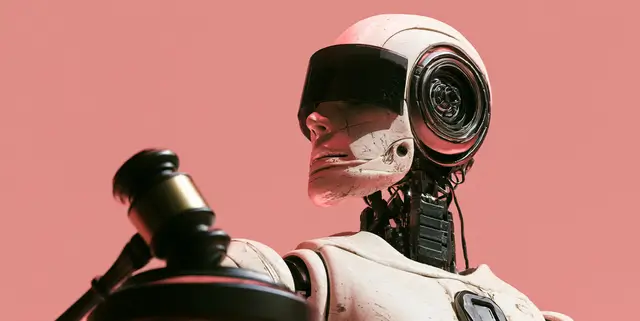
Artificial intelligence is moving from being a helpful tool to something closer to a digital worker. That shift is exciting, but it also opens a new legal frontier: who is responsible when an AI agent causes harm? If a chatbot gives bad advice, if an automated assistant makes a costly mistake, or if an AI system takes action that hurts a person or business, can the company behind it be sued?
The answer is likely yes in many cases, but the details are still being worked out. This is one of the first great legal battles of the AI age, and it may shape how these systems are built for decades.
Why AI agents are different
Older software usually followed fixed instructions. If a program broke, the blame often rested on a bug, a bad setting, or a user error. AI agents are different because they can make more flexible decisions. They can read, write, plan, search, summarize, and sometimes act on a person’s behalf.
That makes them useful, but it also makes responsibility harder to pin down. If an AI agent sends the wrong message, approves the wrong purchase, or gives dangerous advice, the harm may come from a chain of events rather than one simple mistake.
This is why lawyers are paying close attention. Courts may need to decide whether an AI agent is more like a tool, a product, a service, or something entirely new.
Where lawsuits may come from
There are several legal paths that could be used against AI companies:
- Negligence – the company failed to take reasonable care in building or deploying the system.
- Product liability – the AI system was defective or unreasonably dangerous.
- Breach of contract – the company promised certain protections or performance and did not deliver.
- Misrepresentation – the company overstated what the AI could safely do.
In plain language, the key question is whether the company acted responsibly. Did it test the system? Did it warn users about risks? Did it give people enough control? Did it know the agent might behave badly and release it anyway?
The hard part: proving fault
AI companies will likely argue that their systems are tools, and that users must supervise them. They may also say that no one can fully predict every output or action an AI will take. That is true to a point. These systems are not magic, but they are also not simple machines.
Courts will have to balance two ideas at once:
- Companies should not be blamed for every bad outcome a user experiences.
- Companies should not escape responsibility when they design powerful systems without enough safeguards.
This balance matters because the public often sees AI as a black box. When something goes wrong, people want to know who is accountable. If no one is clearly responsible, trust in the technology may quickly weaken.
Why this moment matters
Every major technology wave has forced society to redraw the rules. Railroads brought new safety laws. Cars led to traffic rules and insurance systems. The internet changed ideas about privacy, speech, and liability. AI is now entering that same historical pattern.
What makes this moment especially important is that AI agents do not just display information. They may take action. That means the legal system cannot treat them as passive software for very long. Over time, we may see new standards for testing, disclosure, human oversight, and insurance.
This could also change how companies compete. Firms that build safer agents may gain a long-term advantage, much as car makers with better safety records earned public trust. In the future, “liable AI” may not just mean legally accountable. It may also mean commercially successful.
What businesses and users should watch
For now, companies using AI agents should be careful and practical:
- Keep a human in the loop for important decisions.
- Set clear limits on what the agent can do.
- Log actions so mistakes can be reviewed later.
- Read vendor terms closely and ask about liability coverage.
- Train staff to treat AI output as helpful, not final.
Regular users should also stay alert. If an AI system is making decisions that affect money, health, work, or legal rights, it is wise to understand who is actually in control.
The legal fight over AI agents has only begun, but it will not stay in courtrooms alone. It will shape product design, business strategy, insurance, and public trust. In that sense, this is more than a legal dispute. It is the opening chapter in defining how much power we are willing to give machines, and how much responsibility we will demand from the companies that build them.