





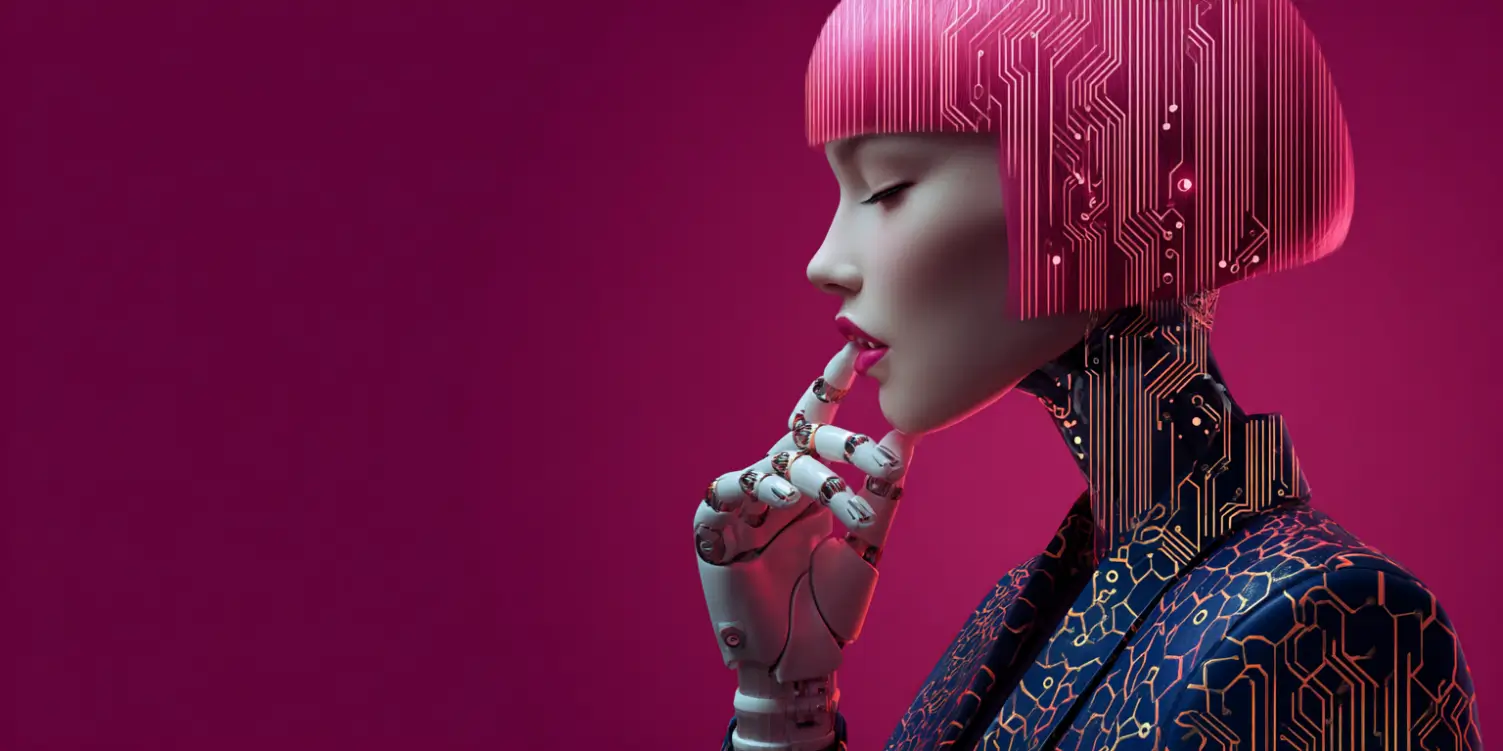
In today’s ever-evolving world of technology, there’s a fascinating debate that’s sparking conversations across the globe: can creations by artificial intelligence (AI) be considered true art? With AI systems now capable of producing music, painting pictures, and even writing poetry, it’s time to explore what art means in the age of machines.
Understanding AI’s Role in Creativity
To understand whether AI-generated works can be classified as art, it’s helpful to first grasp how AI contributes to the creative process. AI algorithms are created by human engineers and rely on vast data sets to learn patterns and styles. These algorithms can mimic the techniques of renowned artists or compose music in the style of classical composers. Some AI programs create original pieces by combining and altering elements learned from these data sets.
For instance, AI might analyze thousands of paintings to create a new image in the style of Vincent van Gogh or compose a song that echoes the themes and notes of Mozart. The fascinating aspect is that these machines do not have emotions or intentions like human artists. They essentially process data and reproduce results based on mathematical probabilities and patterns.
The Question of Authenticity
A critical part of the debate revolves around authenticity and intention. Traditional art is a deeply personal form of expression, where the artist conveys emotions, experiences, and perspectives. AI, however, does not have personal experiences or emotions. This lack raises the question: Can art be truly authentic if it is not created with intent or feeling?
Some art purists argue that without human intention, AI-generated pieces cannot be considered genuine art. Others believe that the very concept of what art “is” can evolve alongside technology. Just because AI art doesn’t come from a place of sentiment, doesn’t necessarily mean it lacks value or aesthetic pleasure.
An Expanding Definition of Art
As history shows, art has always evolved. From the cave paintings of early humans to the digital art of today, what society regards as art has expanded and changed over time. In this context, AI could be seen as just another tool or medium for artists to explore new frontiers of creativity.
For example, some artists are now collaborating with AI to push the boundaries of their own creativity. Human artists can use AI to experiment with new styles or generate ideas that they incorporate into their work, leading to a fusion of technology and human creativity. In such collaborations, both the intent and the creative decision-making involve both the human and the AI, blurring the lines even further.
Evaluating AI Art’s Impact on the Artworld
AI-generated art has already started to make waves in the art world. In 2018, an AI-created portrait sold at a major auction house for an astonishing price, demonstrating that there is interest and market for these works. However, it also raises questions about the value and uniqueness of art when machines can produce it in bulk.
Moreover, there’s concern about how AI might impact traditional artists, both positively and negatively. On one hand, AI could serve as a powerful tool, aiding artists in their work. On the other hand, it may also compete with artists for attention and income in a crowded marketplace.
The Future of Art and AI
As AI technology continues to advance, it’s likely that its influence on art will grow even more significant. Whether through collaboration with human artists or in generating entirely new works, AI challenges us to reconsider our definitions and perceptions of art. While this might be unsettling for some, it’s also an opportunity to embrace a new wave of creativity.
Ultimately, whether AI-generated works are considered “true art” might depend on individual perspectives and how open we are to evolving concepts. Art, after all, is about pushing boundaries and exploring new possibilities, and AI could be the latest frontier for just that.